
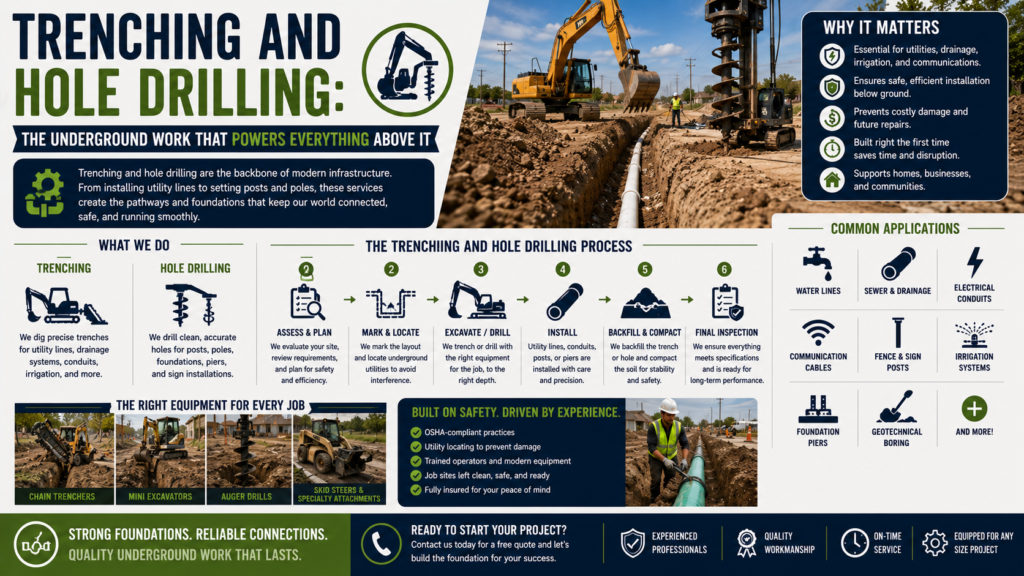
Most of the systems we rely on every day live underground. Water lines, sewer pipes, gas lines, electrical conduits, fiber optic cables, drainage systems, and structural foundations all depend on careful work below the surface. Two of the most important services that make this underground infrastructure possible are trenching and hole drilling. Together, they create the pathways and footings that support buildings, utilities, and modern life as we know it.
This article walks through what Trenching And Hole Drilling Detroit actually involve, the different methods used, the role they play in construction, and why these services demand careful planning and skilled execution.
What Is Trenching?
Trenching is the process of digging a narrow, deep cut in the ground, typically to install or service something underground. Trenches are deeper than they are wide, and they’re used for everything from running water and sewer lines to placing electrical cables and drainage pipes.
The depth and width of a trench depend on what it’s being used for. A residential water line trench might be just a few feet deep, while utility trenches for large commercial projects can reach much deeper. Trenches can also vary in shape, including straight-walled, sloped, or benched designs, depending on soil conditions and safety requirements.
What Is Hole Drilling?
Hole drilling refers to creating round, often deep openings in the ground for purposes such as footings, foundation piers, sign posts, fence posts, utility poles, soil testing, and geothermal systems. Drilling produces a precise hole at a specified depth and diameter, often using augers or specialized drilling equipment.
Some hole drilling is shallow and quick, like setting fence posts. Other projects require deep, large-diameter holes for structural columns or environmental monitoring wells. The right equipment and approach depend on what the hole is for and the conditions of the soil.
Common Uses for Trenching
Trenching is one of the most versatile excavation services because it supports so many types of underground work.
Water and sewer lines. New construction and replacement of these lines almost always requires trenching to reach the necessary depth.
Electrical and communication cables. Buried power lines, fiber optic cables, and telecommunications conduits run through trenches.
Gas lines. Natural gas distribution depends on a network of buried lines installed through trenching.
Drainage systems. French drains, storm drains, and other drainage solutions require precisely dug trenches.
Irrigation systems. Sprinkler and irrigation lines for residential, commercial, or agricultural properties.
Foundation drainage. Trenches around foundations help direct water away from buildings, preventing basement leaks and structural damage.
Common Uses for Hole Drilling
Footings and piers. Holes drilled for concrete piers form the structural support for decks, fences, signs, and certain types of foundations.
Utility and light poles. Holes for poles need to be deep and consistent to support the structures securely.
Soil testing. Engineers often need soil samples from specific depths to evaluate site conditions before construction.
Geothermal systems. Vertical loop systems for geothermal heating and cooling require deep, precisely drilled holes.
Foundation repair. Helical piers or push piers used to stabilize foundations require careful drilling.
Tree planting and landscaping. Large landscape projects sometimes need professional hole drilling for trees, decorative posts, or landscape lighting.
Trenching Methods
There are several approaches to trenching, and the right one depends on the project, the soil, and the surroundings.
Conventional open-cut trenching. The most common method. A trench is dug from the surface down using excavators or trenchers. It’s straightforward and ideal for many residential and commercial applications.
Trenchless methods. When open-cut trenching would be too disruptive, such as crossing under roads, sidewalks, or landscaped areas, trenchless techniques can install utilities without digging a long trench. These include horizontal directional drilling and other boring methods.
Microtrenching. A specialized method that creates narrow, shallow trenches, typically for fiber optic installation. It’s less invasive than conventional trenching and works well in urban environments.
Hole Drilling Methods
Auger drilling. The most common method for residential and commercial projects. Augers spin into the ground to remove soil, creating clean, consistent holes.
Rotary drilling. Used for deeper holes or harder soil and rock conditions. It uses a rotating drill bit and often involves drilling fluid to remove cuttings.
Horizontal directional drilling (HDD). A trenchless method that creates a horizontal underground path for utilities. A pilot hole is drilled along a predetermined route, then enlarged using reamers, and finally the utility line is pulled through. It’s especially useful for crossing under roads, rivers, or developed areas.
Jack and bore. A method for installing pipes underground without open trenching. It uses hydraulic jacks to push casing pipes through the soil while soil is removed from the inside.
Safety Considerations
Trenching and hole drilling are some of the more hazardous activities on a construction site. Cave-ins, falls, contact with underground utilities, and equipment-related injuries are all real risks. That’s why proper planning, equipment, and safety procedures are critical.
Calling for utility locates before any digging is one of the most important safety steps. Underground utility lines, gas, water, sewer, electric, telecom, can be expensive and dangerous to hit. Identifying their locations beforehand protects workers, the public, and the integrity of the existing infrastructure.
Trench protection systems such as shoring, sloping, and trench boxes are used in deeper trenches to prevent cave-ins. Workers also need clear access and egress, proper ventilation in deep trenches, and continuous monitoring of soil conditions.
Common Questions About Trenching and Hole Drilling
How deep can trenches go? It depends on soil conditions and the project. Residential trenches are typically a few feet deep, while utility trenches can go much deeper. Local codes often dictate minimum depths to protect lines from freezing or accidental damage.
Is trenchless better than open trenching? Each has advantages. Trenchless minimizes disruption to roads, landscapes, and existing structures, while open trenching is often faster and more cost-effective in open areas with easy access.
Do I need a permit for trenching or hole drilling? Many projects do. Local building departments, utility authorities, or environmental agencies may require permits, especially for deep or extensive work.
Can I trench or drill on my own property? Limited shallow work like fence posts might be manageable for homeowners, but anything deeper or near utilities should be handled by professionals with locating services and the right equipment.
Why is calling 811 important? Calling 811 before digging is a free service that arranges for underground utilities to be marked. It prevents damage and dangerous accidents.
Why Detroit Properties Often Need Trenching and Hole Drilling
Detroit’s active construction, redevelopment, and infrastructure improvements all rely heavily on underground work. New utility lines, drainage upgrades, foundation work, and commercial development create constant demand for skilled trenching and drilling services. Professional Trenching And Hole Drilling Detroit services help projects of every size move forward safely, on schedule, and in compliance with the regulations that protect both workers and existing underground systems.
The Bottom Line
Trenching and hole drilling might not be flashy, but they’re some of the most important services in modern construction. They make it possible to install the utilities, foundations, and infrastructure that everything else depends on. Without skilled trenching and drilling, the systems that bring water, power, gas, and connectivity to homes and businesses simply wouldn’t exist.
Done right, this work is precise, efficient, and almost invisible once completed. Property owners typically don’t think about the pipes and conduits buried below their feet, which is exactly the point. Quiet, reliable underground systems are the result of careful trenching and drilling done by people who understand the soil, the equipment, and the safety procedures involved.
Whether the project is a residential utility upgrade, a commercial development, or a city-wide infrastructure improvement, trenching and hole drilling deserve recognition as the foundational work that quite literally makes everything above ground possible.